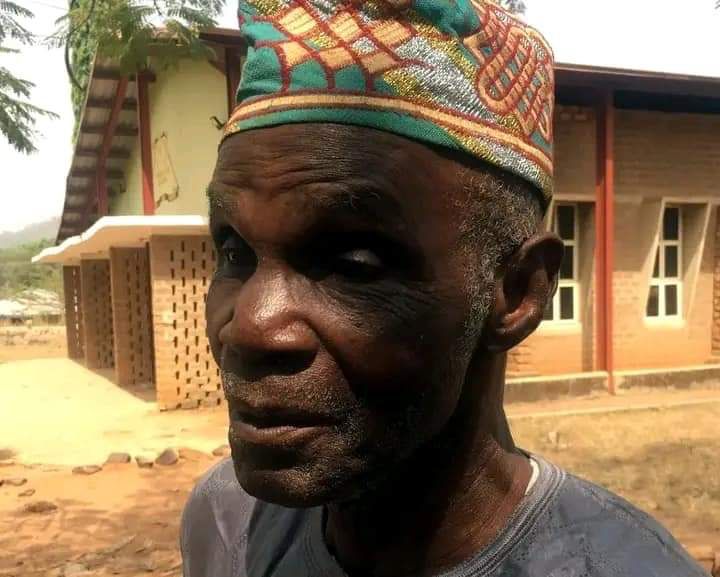
Fame just wouldn’t let Jimoh Bola Akolo (a.k.a. Jimoh Akolo) be. Instead, it tracked him down to his hometown, Egbe, in Kogi State. This was where this reticent contemporary of the trail-blazing Zaria Art Society members had relocated—and sought a haven of peace, so to speak—after retirement from Ahmadu Bello University, Zaria, sometime between the end of 1999 and early 2000.
Oftentimes, Akolo’s name had continually popped up among aficionados in local, informed art circles who, seemingly scandalised by the scant attention he was getting in the amnesia-prone art scene, took decisive steps towards redressing the anomaly. Besides his proficiency in painting, which predated his years at the Nigerian College of Arts, Science, and Technology (abbreviated as NCAST) in Zaria and had earned him several awards at the Northern Regional Festival of Arts, there were also the recent sales of his paintings for respectable prices at the Bonhams African Modern and Contemporary Art Auction, which wouldn’t have gone unnoticed among the cognoscenti.
It came as no surprise, therefore, that last year’s retrospective exhibition at kó, a gallery in the upmarket Ikoyi neighbourhood of Lagos, which was curated by Professor Jerry Buhari of Ahmadu Bello University’s fine arts department, included a video conversation with him and scholarly tributes from people who had closely interacted with him. Yet not even the laudatory remarks of his contemporary, Dr. Bruce Onobrakpeya, his former classmate and colleague at the Faculty of Education at Ahmadu Bello University, Professor Adamu Baikie, his only surviving son, Richard Ayodeji, or those of his younger female siblings, Mercy Feyisola Akolo and Grace Yemisi Ukhueleigbe, among others, sufficed to unravel the web of mysteries woven around this reclusive artistic great.