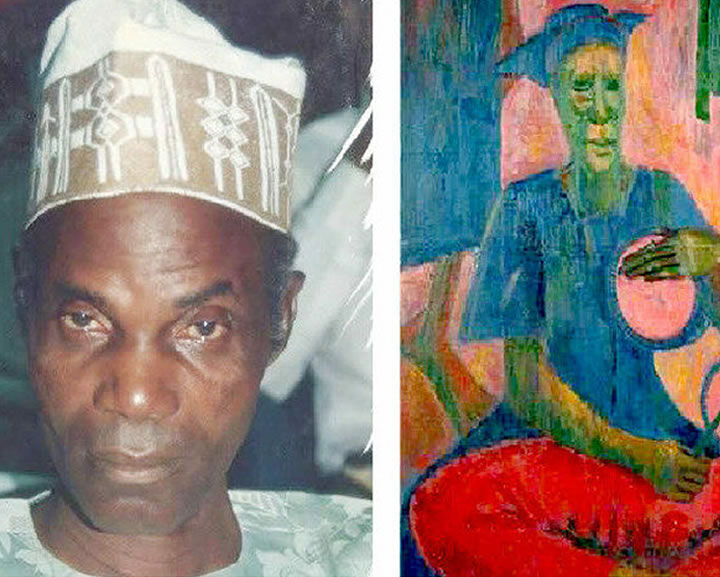
Akolo was known for paintings that drew deeply on indigenous cultural traditions, everyday life, and Northern Nigerian landscapes and peoples.
He did not paint abstract concepts far removed from daily experience. Instead, he brought lived subjects into careful formal balance. Themes like horse riders at festivals, wrestlers, milkmaids, and quiet scenes of daily labour. His works carry strong colours, thoughtful structure, and a measured, almost architectural sense of space that reflects both his early artistic discipline and his exposure to a wide range of traditions.
His control of form and colour was admired as both modern and deeply rooted in Nigerian realities. This blend helped define a uniquely Nigerian modernism in visual art.
Akolo’s work was shown widely, both in Nigeria and internationally:
- Solo shows and group exhibitions in London, including at the Commonwealth Institute.
- Participation in international biennials, such as the Havana Biennial in Cuba.
- Exhibitions at the National Gallery of Art, Abuja, and many others.
His works have also appeared in major museum collections and have been sold at international auction houses, confirming his place as one of Nigeria’s leading artists.